
Remodel and modify your database to fit your business ideas.
A fully customized Access solution, flexible enough for how your business actually runs — whether that means a brand-new template or changes to the system you already have.
- Less Time Spent on Manual Work
- Higher Team Productivity
- Lower Ongoing Costs
- Simplified Processes
See our pricing plans → — starting from $40/hour, no obligation.
You'll work directly with Mr. Ali, not get routed through a call center.
What a customization project covers
Whether it's a brand-new template or changes to a database you already run, here's what we typically work through.
Database Architecture Redesign
Tables, fields, and relationships are restructured to match how your business actually operates.
Improved Reporting
Reports are rebuilt or added so you can pull the exact numbers you need, formatted the way you need them.
Running Automatic Programs
Repetitive tasks get automated so your team spends less time on manual data entry and upkeep.
Use of Macros & VBA
Custom macros and VBA scripts handle the logic behind your workflows, from validation to scheduled jobs.
Query Optimization
Slow or clunky queries are rewritten and indexed properly so the database responds quickly as it grows.
Adding & Improving Security
User-level permissions and access controls are tightened so the right people see the right data.
Flexible Access Development
Every change is made with future edits in mind, so the database stays easy to extend as your needs change.
The two kinds of databases people bring me
Customization requests almost always come from one of two places. The first is a stock template, often one of Microsoft's own (asset tracking, inventory, contacts), that fits maybe 70 percent of the job. The second is a database someone built years ago, an employee who has since left or an owner who taught themselves Access, that has grown crooked as the business changed around it. The work is different for each, so I start by figuring out which one I'm looking at.
With a stock template, the gap is usually structural. The template tracks one price per product but you sell at wholesale and retail. It assumes one contact per company while your clients have five. The invoice report looks nothing like your actual invoice. I extend the tables and relationships first, then rework the forms and reports on top, because relabeling a form without fixing the table underneath just hides the mismatch until it shows up in your reporting.
Inherited databases need a diagnostic pass before anything gets changed. I check whether relationships are actually defined or just implied, whether tables have primary keys, what the VBA behind each button really does, and which objects are dead weight, since most old databases carry forms and queries nobody has opened in years. Only then do I make the changes you asked for. Modifying a database you don't fully understand is how a small tweak turns into a broken payroll report, and I'd rather spend two extra hours reading than two extra days repairing.
The requests themselves are usually concrete and small-sounding. Add a barcode field to the inventory screen. Make the quote form carry its numbers into the invoice instead of retyping them. Put an approval step between "entered" and "posted". Stop the report from splitting a customer across two pages. Each of these touches tables, forms, and sometimes code, which is why a five-minute description can honestly be a two-hour job or a two-day one, and part of my role is telling you which before you commit.
Every change happens on a copy, with your live file untouched until the modified version has been tested against real data. For databases in daily use I usually schedule the swap for a quiet evening or a weekend, so your team closes the old version one day and opens the improved one the next morning without losing an hour in between. You also get a plain-language note of what changed and where, which future-you (or the next developer) will be glad exists.
See it built for a real business
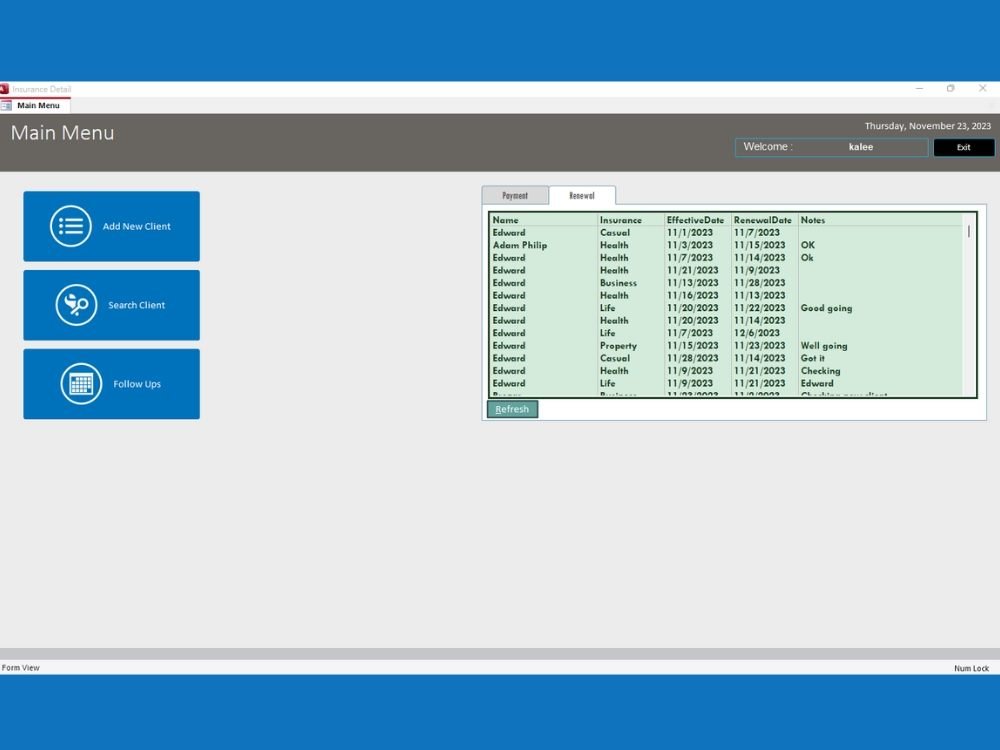
Insurance Agency Management System
A custom MS Access CRM for an insurance agency — customer and family profiles, multi-line policy tracking, and renewal/payment alerts.
View case study →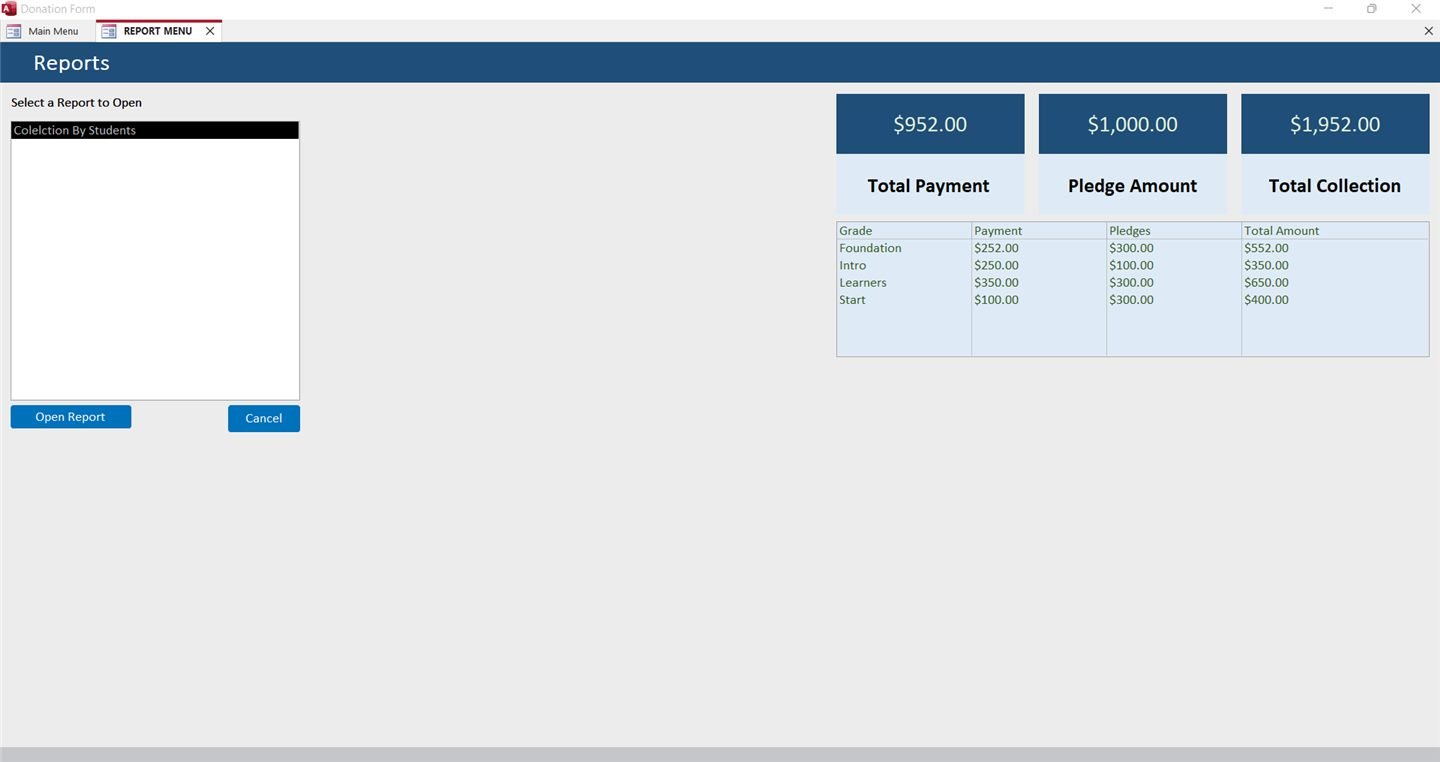
Student Fundraising & Donation Tracker
An MS Access donation tracker built for student-led fundraising — real-time dashboards and classwise statistics.
View case study →Frequently asked questions
Do you customize existing templates or only build from scratch?
Both — we can adapt an existing Access template to your workflow, or make targeted changes to a database you already run.
What kinds of customizations are most common?
Redesigning table structures, adding automated macros and VBA, optimizing slow queries, and tightening up security and user permissions.
Will customizing my database interrupt daily operations?
We plan changes around your schedule and test thoroughly before rollout, so your team keeps working with minimal disruption.
How much does a customization project cost?
It depends on scope — see our hourly pricing for existing databases on the homepage, or contact us for a fixed quote on larger changes.
Have an idea for your database?
If there's something about your database that's bugging you, or an idea you'd like built in, tell me about it and I'll tell you what's realistic.